Maximum data. Minimum disruption.
Rail infrastructure is unforgiving: even millimeter-scale deviations in track geometry can compromise safety and ride quality. We provide comprehensive monitoring built for the high-stakes demands of active rail corridors.
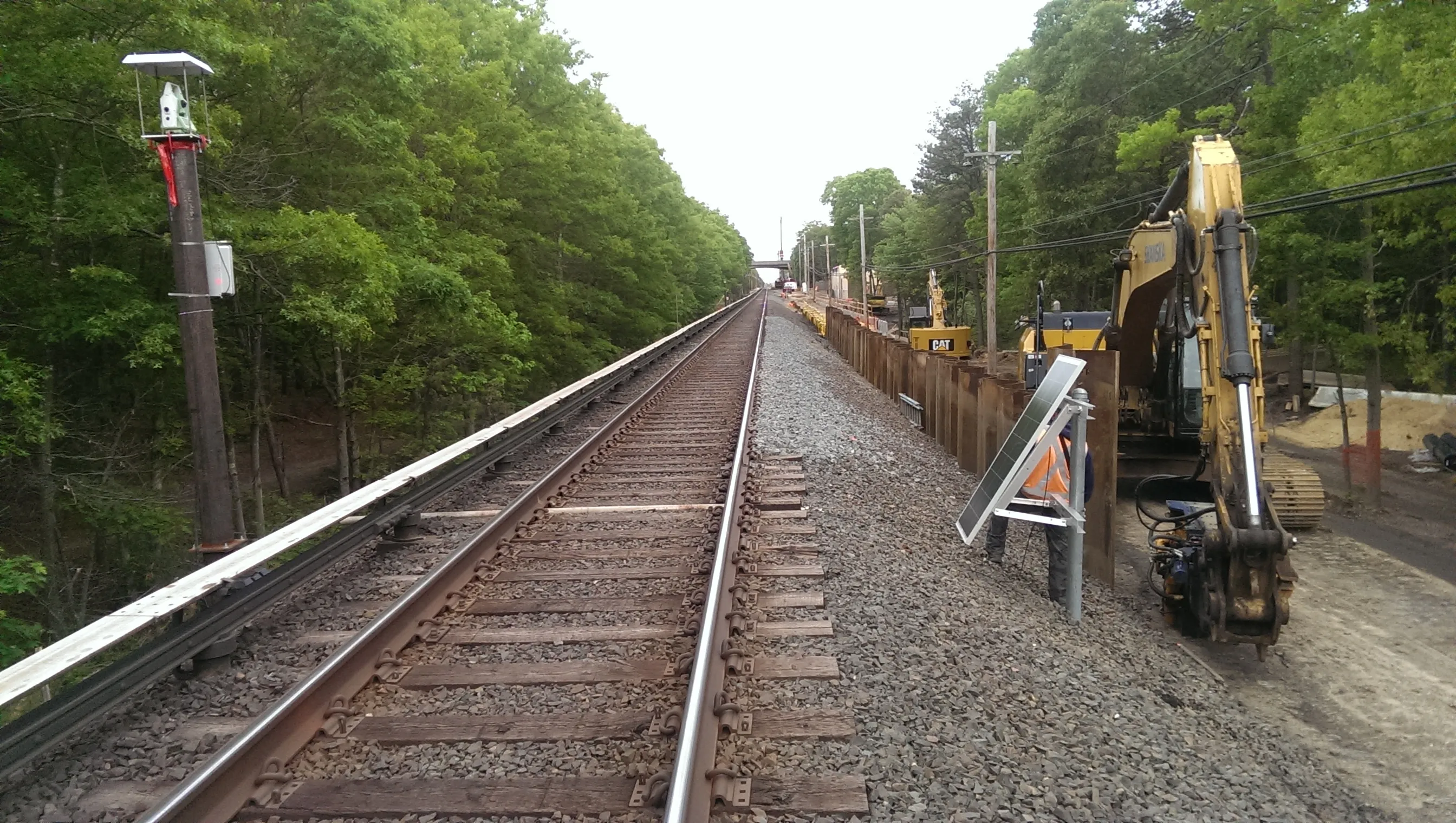
Our approach pairs wireless mesh networks with automated optical systems to monitor track geometry and structural health remotely. This "boots-off-ballast" model drastically reduces manual track surveys, keeping your personnel safe and your lines operational 24/7.
Core Track Monitoring
03 disciplinesAutomated Track Geometry
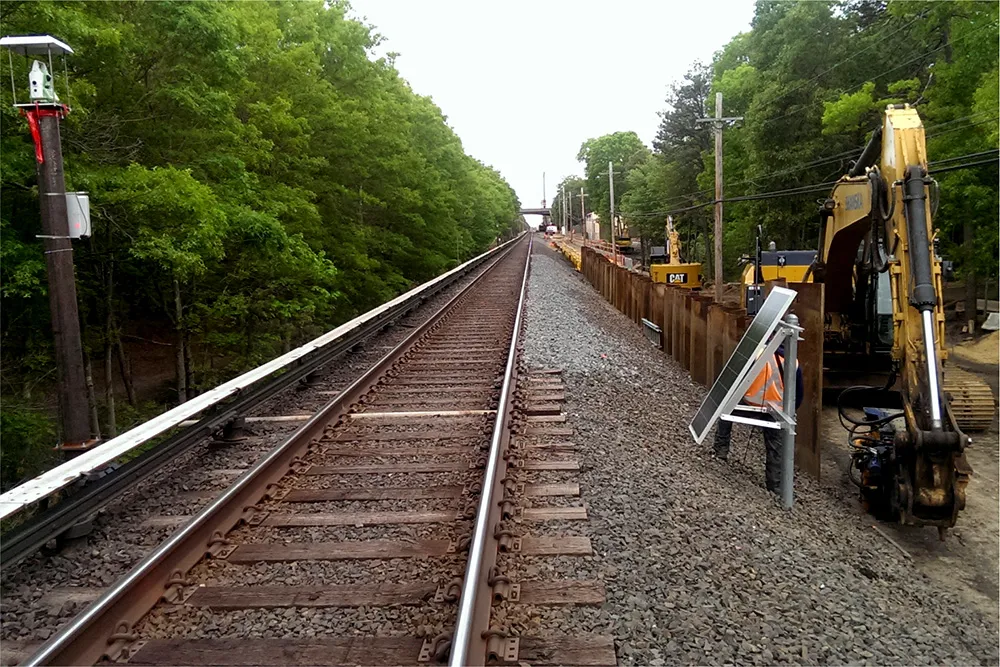
Wireless tilt nodes and optical prisms mounted on the sleepers track twist and cant (superelevation), longitudinal settlement of the track bed, and lateral movement from thermal expansion or adjacent excavation.
Automated Motorized Total Stations
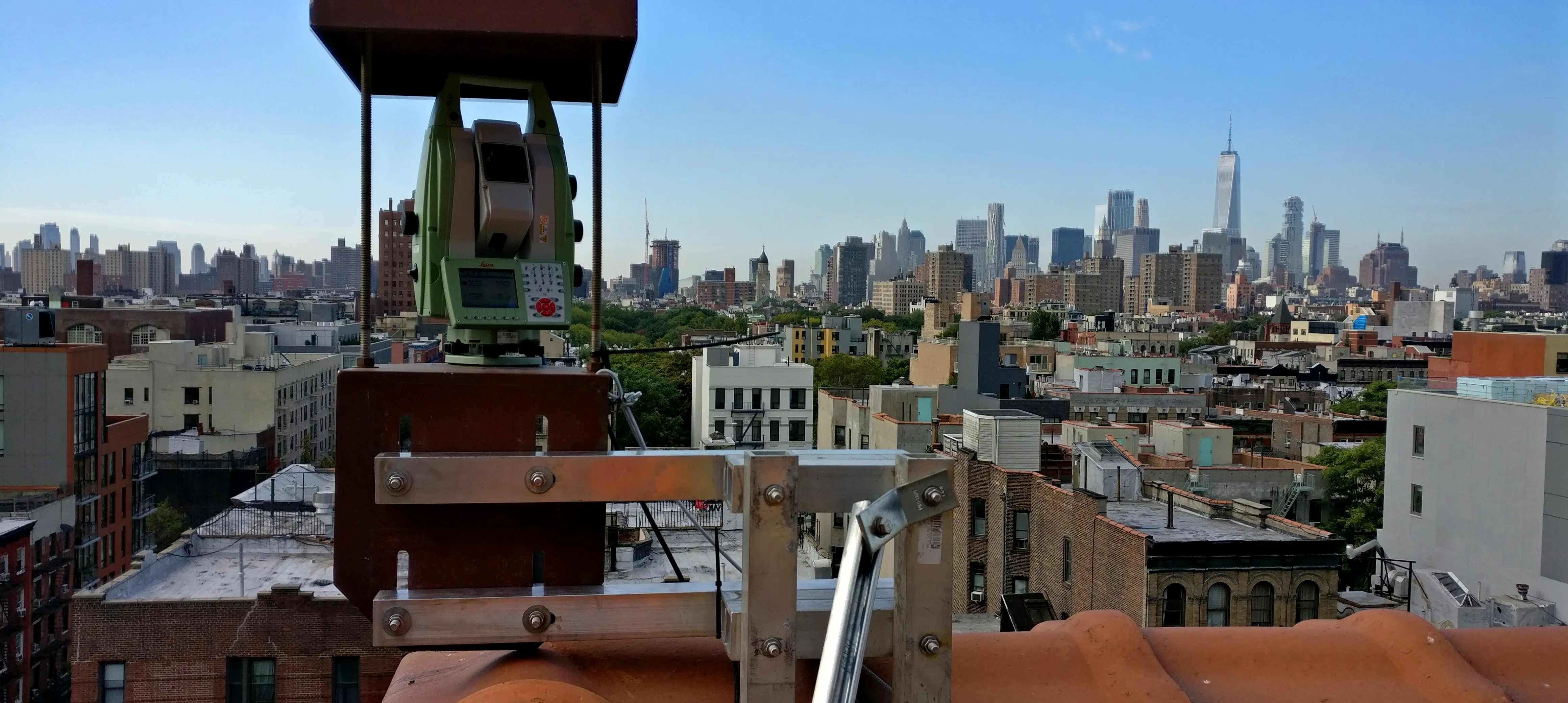
Robotic total stations continuously shoot prisms on the rails, overhead catenary poles, and tunnel walls: a golden-standard absolute 3D coordinate check confirming that nearby construction isn't deforming the ground.
Void & Deflection Monitoring
Displacement transducers and accelerometers measure dynamic vertical deflection as trains pass, exposing "pumping ties" and soft spots in the ballast before they lead to rail breaks.
Advanced Rail Technologies
Wireless Mesh Networks
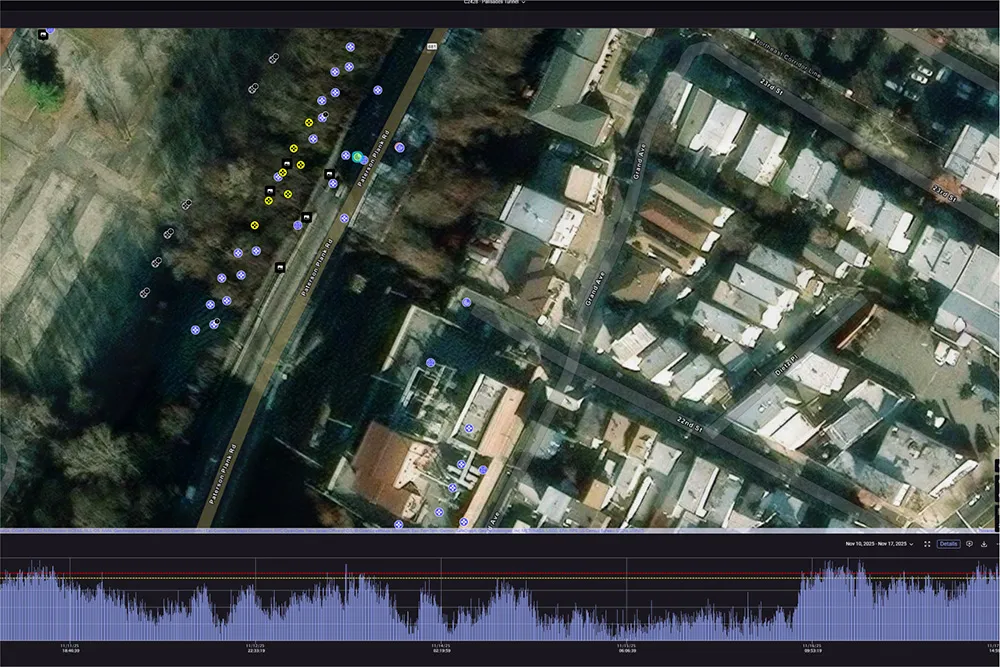
Self-healing sensor networks relay data across the corridor without trackside cabling, surviving the harsh, high-traffic rail environment and feeding a live picture to the office.
Boots-off-Ballast Surveying
Remote automated optical and tilt systems replace manual walking surveys, removing personnel from live track while increasing the frequency and consistency of the data.