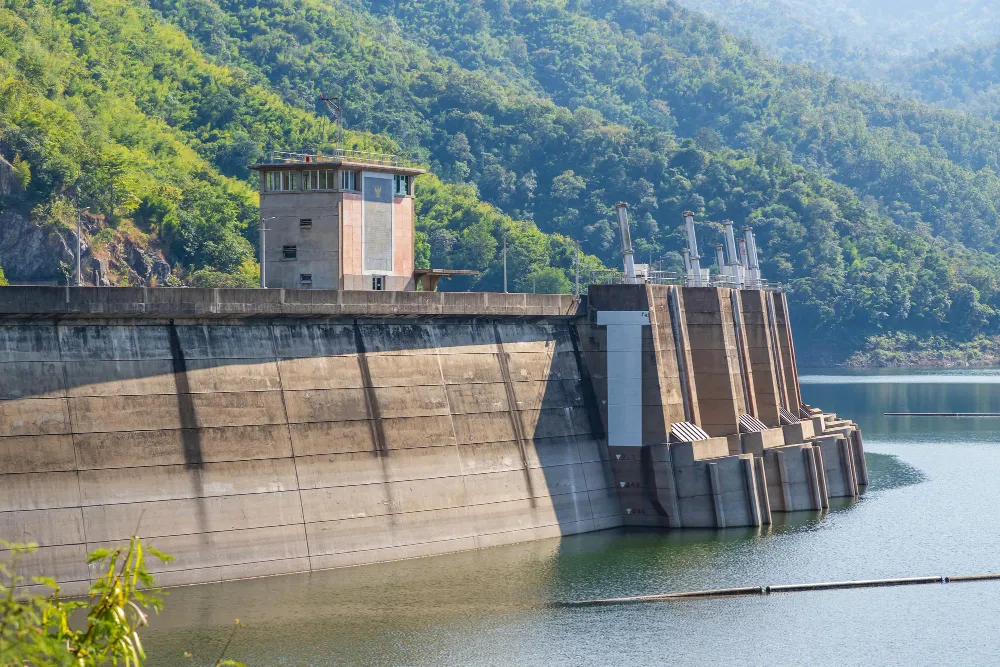
The eyes and ears of dam operators.
The safety of a dam relies on the stability of invisible forces. Whether a concrete arch dam, an earthen embankment, or a tailings facility, our systems track the complex interaction between hydraulic pressure, structural stress, and ground deformation.
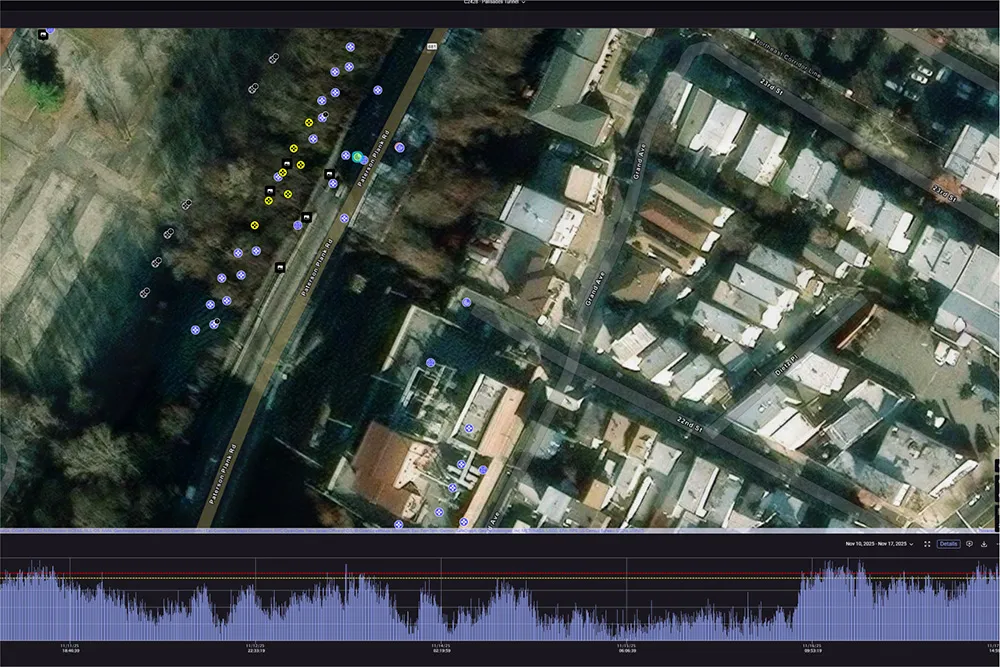
With decades of experience, we empower operators to detect potential failure modes, such as internal erosion or foundation sliding, long before they become visible. Automated, regulatory-compliant data in real time protects downstream communities and the longevity of the water asset.
Core Dam Monitoring
04 disciplinesSeepage & Leakage Monitoring
Uncontrolled seepage is the leading cause of embankment-dam failure. Automated stations at toe drains and relief wells measure flow and turbidity. Ultrasonic and magnetostrictive sensors on automated weirs catch minute changes in flow volume, while turbidity sensors detect the cloudiness that signals "piping," the internal erosion washing away the dam core.
Pore Pressure & Uplift
High pore pressure can destabilize a foundation. Vibrating-wire piezometers in the core and foundation track the phreatic surface, while uplift pressure cells at the rock-concrete interface verify the dam isn't being lifted by water pressure: the precursor to sliding or overturning.
Geodetic & Deformation
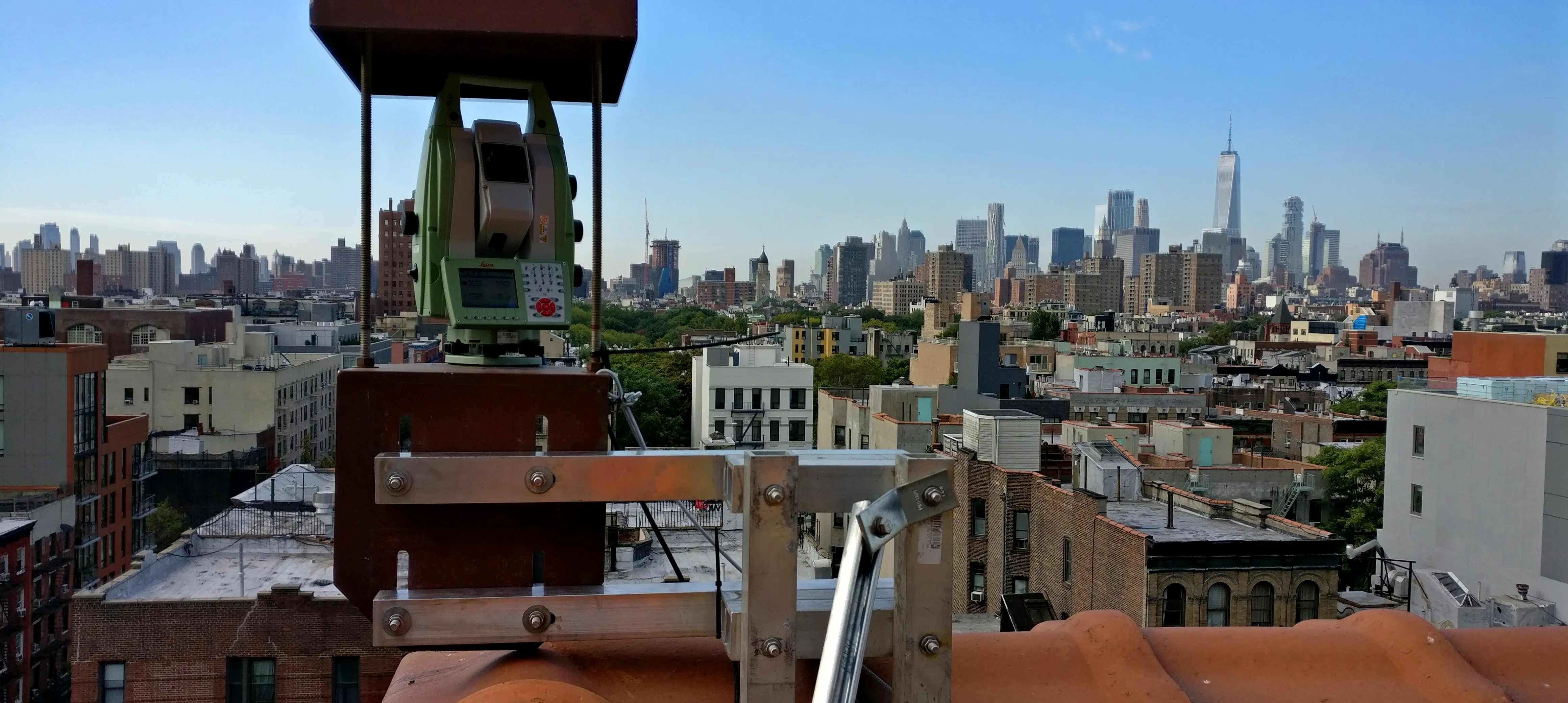
Dams breathe cyclically with temperature and reservoir level; the skill is telling normal movement from dangerous deformation. Robotic total stations (AMTS) watch crest and face prisms for downstream drift and settlement, vertical inclinometers through the crest catch deep-seated shear and rotational slips, and extensometers measure axial deformation and foundation settlement with high precision.
Structural Stress & Joints
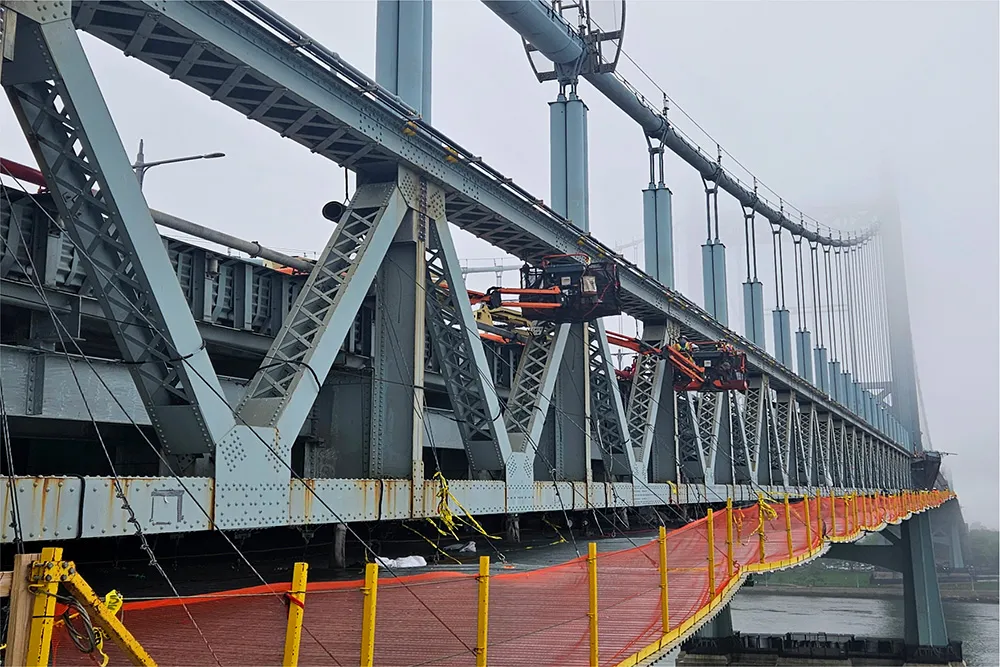
For concrete gravity and arch dams, we monitor the internal health of the structure: joint meters track the opening and closing of contraction joints to confirm the dam remains monolithic, while embedded stress cells and strain gauges measure compressive force and verify reservoir loads are transferring safely to the abutments.
Advanced Dam Technologies
Seismic (Strong-Motion) Monitoring
Dams must survive earthquakes. Triaxial accelerometers on the foundation and crest trigger an immediate state-of-health report after a seismic event, so operators can rapidly assess whether the dam exceeded its design acceleration.
Fiber-Optic Leak Detection (DTS)
Distributed Temperature Sensing fiber buried along the toe acts as a thermometer over kilometers. Because seeping water differs in temperature from the soil, the cable pinpoints the exact location of a leak to within meters.
InSAR Satellite Monitoring
For large reservoirs, satellite radar monitors the stability of the natural slopes around the water, detecting potential landslides that could generate dangerous impulse waves.